

Designing Homes in Coastal Orange County
Key Takeaways
Coastal Orange County is not one design style. Newport Beach, Laguna Beach, Dana Point, and San Clemente each have distinct architectural influences that should guide design decisions.
- Even within the same city, neighborhoods vary. A home in Corona del Mar requires a different approach than one in Newport Coast or Balboa Island.
- Good design starts with context. The architecture, the surrounding community, and how the home is lived in should all inform the design.
- In Newport Beach, entertaining and indoor-outdoor living are central. Homes often include outdoor kitchens, pools, and spaces designed to host, with seamless transitions between indoors and out.
- Laguna Beach design is driven by site and character. Preserving views, maintaining sightlines, and creating flow between indoor and outdoor spaces are key.
- In Dana Point and Corona del Mar, the focus is often on editing and cohesion. Many homes have been updated over time, and the goal is to create a more connected, intentional result.
- In San Clemente, Spanish-style architecture should be honored but not overdone. The goal is to refine and interpret it in a way that feels natural for how people live today.
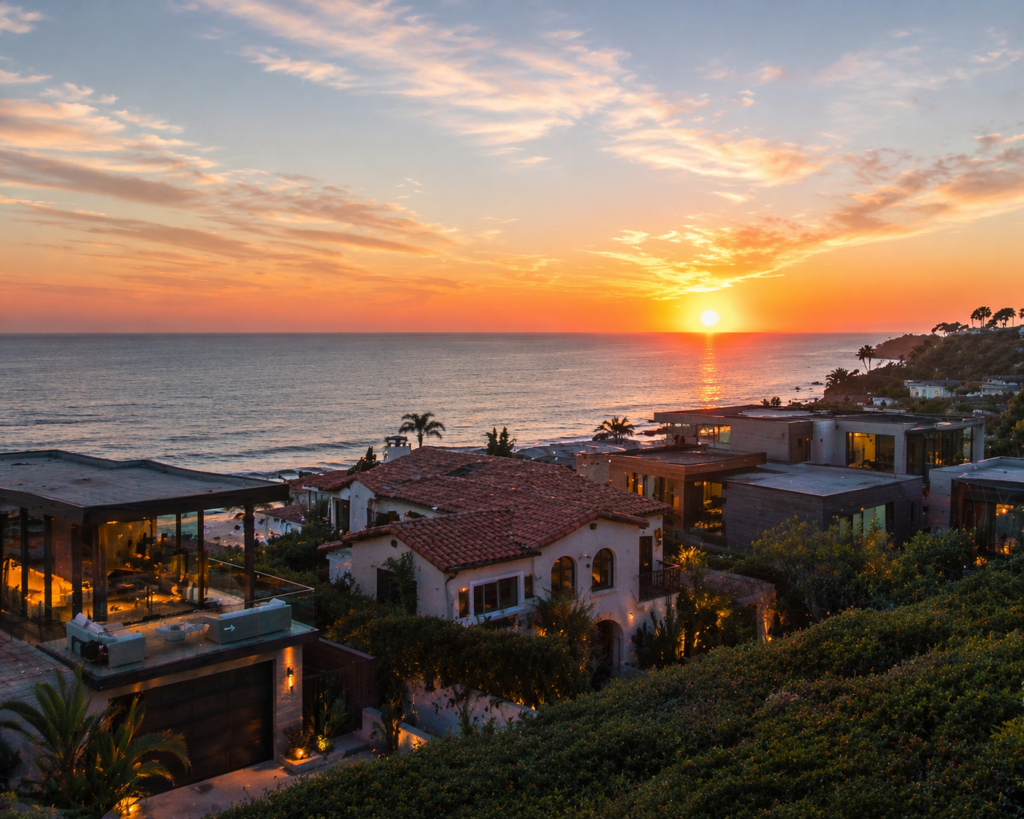
Designing homes in coastal Orange County isn’t about following a single “coastal” style. It’s about responding to the architecture, the surrounding community, and how the home is actually lived in.
Most people think it means light, bright, and a little bit beachy. That’s usually where things go wrong. There are far more design aesthetics lining our coastal communities than just the overdone “Coastal California” look with the beiges, whites, and light blues.
For example, Newport Beach doesn’t live the same way as Laguna Beach, and Dana Point doesn’t carry the same architectural language as San Clemente. Even within Newport, Corona del Mar tells a very different story than some of the larger-scale newer builds.
This becomes even more clear when you look at areas like Newport Beach, Corona del Mar, Laguna Beach, Dana Point, and San Clemente side by side.
Designing Homes in Newport Beach
Newport Beach proper has a different rhythm than Corona del Mar. In Newport, you’re going to find a mix of ultra-modern architecture, more transitional homes, and pockets of Spanish influence depending on where you are. Then you have Balboa Island, where some of the older, more original homes still hold onto tons of character and charm. Even within the same city, the architecture and overall feel can shift pretty dramatically from one neighborhood to the next.
Lifestyle plays a big role here too. Newport homes are often designed for entertaining, with a strong emphasis on indoor-outdoor living. You’ll see outdoor kitchens, pools, and spaces that are meant to host, not just visually but functionally. That connection between inside and out needs to feel seamless, not like an afterthought.
When everything gets treated the same, the house starts to feel disconnected from where it actually is. This is where your interior designer needs to really pay attention and find that balance between your style, the way you and your family live, the architecture of the home (especially during a renovation), and the character of the neighborhood.
In Newport, particularly in some of the larger or newer homes, scale plays a big role. These homes can handle a higher level of detail and intention, but that doesn’t mean every moment needs to be a moment. There’s a fine line between a home that feels elevated and one that feels overdesigned.
A lot of it comes down to how you layer. You can absolutely build detail on top of detail, but it needs to be done in a way that feels thoughtful and connected. Not a standout feature in every direction, but a quieter layering where materials, textures, and subtle shifts start to build on each other. That’s what gives a home depth without it feeling like it’s trying too hard.
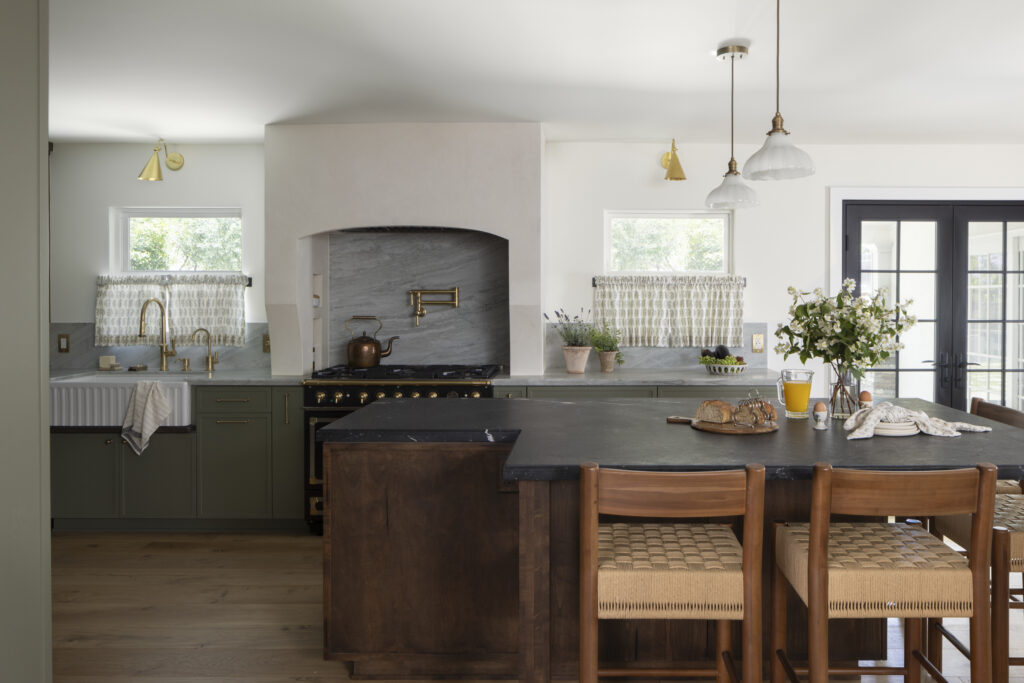
Designing Homes in Corona del Mar
Corona del Mar is a different conversation. The homes tend to have more age, more built-in character, and are scaled differently than some of the homes in Newport proper. You’ll often see layers of updates over time, some that add to the home and some that don’t. That’s where the design process becomes more about editing and creating a stronger sense of cohesion throughout the home.
In one of our current projects there, the clients didn’t want to start from scratch. We’re studying what’s already there and making decisions about what stays, what gets refined, and what quietly gets removed. The goal isn’t to modernize for the sake of it, but to update the home in a way that still honors its character and reflects how our clients want to live in it. Warmer woods, natural stone that feels more organic and less mass-produced, finishes that build richness and even a little patina. It’s about allowing the home to feel like itself, just more resolved.
Designing Homes in Laguna Beach
Laguna Beach requires a completely different level of awareness. The architecture there isn’t uniform, and that’s exactly the point. You’ll see early cottages oozing with charm, mid-century influences, Spanish, and more contemporary homes layered into the hills. A lot of that traces back to its roots as an artist community, and that influence still shows up in how the homes feel.
You can have a 5,000 to 6,000 square foot home sitting right next to a small cottage, and somehow it still works. That mix is part of what gives Laguna its character. It also means the design approach has to be a lot more responsive. You can’t apply the same formula from one home to the next because the site, the scale, and the relationship to the outdoors are constantly shifting.
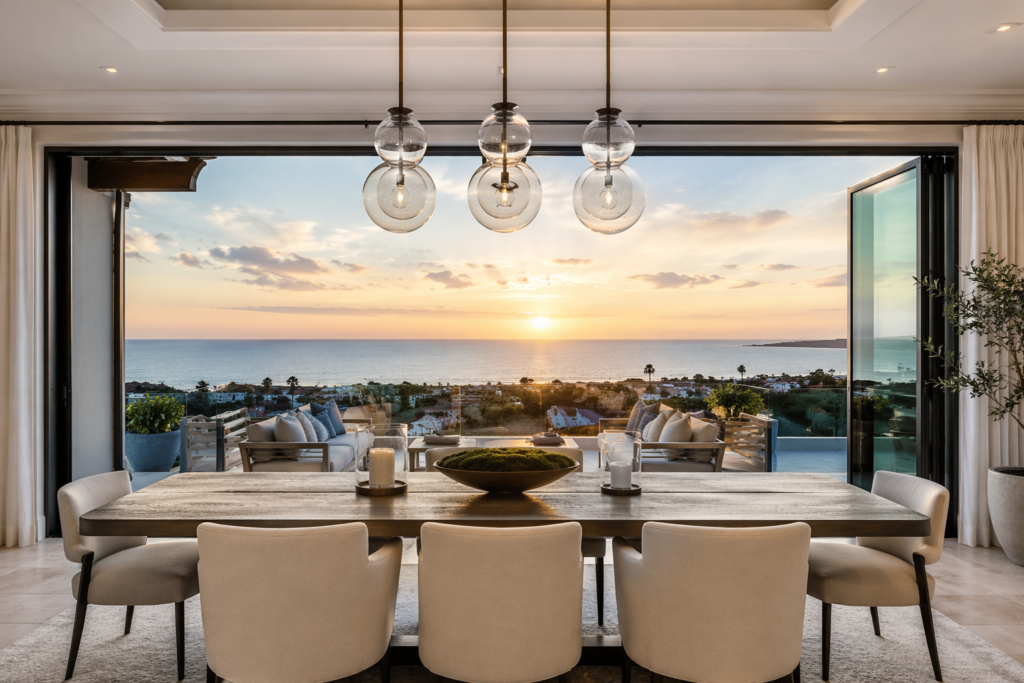
The views are a big part of that, but it’s not just about having them, it’s about how you handle them. We’re often looking at ways to open things up with larger expanses of glass, floor-to-ceiling windows where it makes sense, and making sure the interior layout doesn’t fight the view. Bulky furniture, oversized features, or anything that interrupts that line of sight can take away from what makes the home special in the first place.
At the same time, Laguna has this layered, almost collected character that shows up across very different types of homes. It might be a cottage with leaded or stained glass windows, millwork that’s been painted over time and again, and details that have softened with age. Or a Spanish home with original plaster walls and iron vent covers that bring a natural patina. And then you have the more modern homes that lean into indoor-outdoor living, carrying materials from inside to out with floor-to-ceiling windows and stacking glass doors that open everything up.
The better approach is to be intentional about what actually needs to stand out and what should play a supporting role. Whether it’s natural materials like white oak floors or cabinetry, a beautiful natural stone fireplace, or leaning into deeper, moodier tones, it’s about finding the right balance. Finishes and materials should complement the architecture and the way the home is lived in.
You’re still layering thoughtful detail, but in a way that supports the architecture and the setting instead of competing with it. That’s what gives a home its character, that sense that it’s evolved naturally rather than been overly designed.
Designing Homes in Dana Point
Dana Point is a bit of a middle ground, and it’s been evolving in a really interesting way. There isn’t one dominant architectural style, which means the design has to work a little harder to create a sense of cohesion. You’ll find homes built across different decades, often with multiple rounds of updates that don’t always speak to each other.
That’s where the design process becomes more about pulling everything into alignment. In the projects we’re currently working on there, one being a full home remodel with structural changes and another spanning multiple spaces, the focus is less on individual rooms and more on how the home functions as a whole.
We’re often reworking layouts so the flow makes sense for how people live today, opening up key areas where needed, and then carrying materials and tones throughout so there’s a sense of continuity. Never in a way that feels repetitive, but in a way that feels intentional and considered from one space to the next. Each space has it’s own character, but still feels like it belongs.
There’s also a lifestyle component in Dana Point that can’t be ignored. It’s a little quieter, a little slower and more relaxed, and the homes are used in a way that reflects that. The design needs to support everyday living while still feeling elevated. Spaces need to feel comfortable, and nothing should feel overly precious or untouchable.
Designing Homes in San Clemente
San Clemente has a much more defined architectural identity (which we truly love), and this is something we pay close attention to when designing here. The Spanish Colonial influence is still very present, from the white stucco and red tile roofs to the arches and courtyards. That consistency gives the city a strong sense of place.
The challenge isn’t honoring it, it’s not overdoing it. It’s easy to lean too far into the style and end up with something that feels overly themed. The goal is to interpret it in a way that feels natural for how people live today.
That often means refining proportions, simplifying certain details, and introducing materials that feel like they belong without calling too much attention to themselves. Letting the architecture set the tone, and then layering in warmth, texture, and pieces that feel personal to the client.
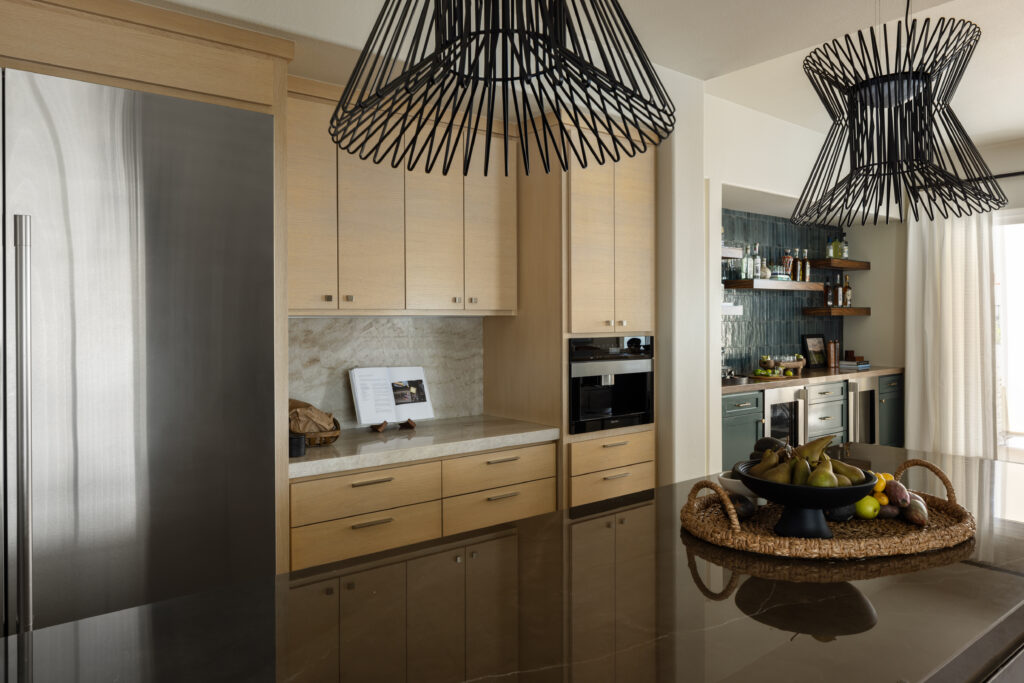
Across all of these areas, the approach comes back to the same idea. The home should make sense where it is and for the people living in it.
That starts with understanding the architecture, not trying to override it. Then looking at how the home is actually used day to day. Not just what someone is drawn to visually, but how they move through the space, where they spend their time, and what’s not working.
From there, the design develops in a thoughtful way that feels specific. Materials and architecture that enhance, details that feel intentional, and spaces that have character and warmth.
That’s what creates homes that hold up over time. Not because they ignore change, but because they aren’t chasing it.
If you’re in Newport Beach, Laguna Beach, Dana Point, or San Clemente and thinking about reworking your home, the starting point isn’t choosing a style. It’s understanding what’s already there and building from that in a way that actually makes sense.
That’s where it starts to feel right.
If you’d like to work with an interior designer who understands the nuances of designing homes in coastal Orange County, we’d love to start the conversation.
If you’d like to learn more about our interior design services for Orange County homes, or you’re ready to start the conversation, we’d love to hear from you.
FAQs About Designing Homes in Coastal Orange County
What is coastal Orange County interior design style?
There isn’t one single style. Coastal Orange County includes a range of architectural influences, from modern and transitional homes in Newport Beach to Spanish-style homes in San Clemente and more eclectic, site-driven homes in Laguna Beach. The best interiors respond to the architecture and surroundings rather than following a set look.
How should I design a home in Newport Beach?
Newport Beach homes are often designed with entertaining in mind. That includes strong indoor-outdoor connections, functional outdoor spaces like kitchens and pools, and interiors that feel elevated without being overdesigned. Layering materials and details thoughtfully is key.
What makes Laguna Beach homes unique to design?
Laguna Beach homes are heavily influenced by their setting. It’s common to see large homes next to small cottages, with strong views and varied architecture. Design decisions should prioritize preserving those views, maintaining sightlines, preserving charm, and creating a natural connection between indoor and outdoor spaces.
How do you update an older home in Corona del Mar or Dana Point?
Many homes in these areas have been updated over time, often without a cohesive plan. The design approach is typically more about editing than starting over, keeping what adds character whenever possible, refining what feels dated, and creating a more connected, intentional flow inside and outside the home.
How do you modernize a Spanish-style home in San Clemente?
The goal is typically to respect the original architecture while refining it. That might mean simplifying details, adjusting proportions, and introducing natural materials, without leaning too heavily into a themed or overly literal interpretation. That might look like replacing and overly ornate iron stair system with a cleaner lined iron stair system or replacing overly rustic (or faux rustic) wood floors or mantles with a brushed style that still has character without feeling dated.
Why is indoor-outdoor living important in coastal Orange County homes?
The climate and lifestyle naturally support outdoor living. Designing with this in mind means creating spaces that transition easily between indoors and outdoors, while also supporting entertaining and everyday use.


Comments Off on Designing Homes in Coastal Orange County