

What an Interior Designer Does During an Orange County Remodel
Key Takeaways
During an Orange County remodel, an interior designer works alongside the contractor and trades from early planning through final walkthrough to protect both the design vision and the investment. A detailed Interior Design Set guides execution, outlining finishes, lighting, cabinetry, and material specifications to prevent costly interpretation errors. Throughout construction, the designer attends key site walks, reviews stone and tile layouts, oversees flooring transitions, and manages procurement and delivery tracking to avoid delays. Onsite issues are resolved collaboratively so the client is not burdened with technical decisions, and final deficiency walks ensure the finished home aligns with the approved design.

Many homeowners assume an interior designer selects paint colors, tile, and furniture. And yes, we do. But during an Orange County remodel or custom home construction project, our role goes far deeper. An experienced interior designer is involved from early planning conversations through final deficiency walks, collaborating with architects, contractors, and trades to protect both the design vision and the client experience.
If you’re preparing for a renovation or new build and wondering what actually happens once construction begins, here’s what that truly looks like.
A Quick Note on Process
If you’d like a deeper look at how we structure our phases, you can explore what an Orange County interior designer actually does and how to plan for your Orange County home renovation in those dedicated posts, where we walk through the process from early planning through construction in greater detail.
In this post we are walking you through what happens once construction is underway. Where we step in. What we catch. How we collaborate. How we protect your investment.
Before Construction: Aligning Vision, Architecture, and Investment
Ideally, we are brought in at the very beginning of a project. The earlier we are involved, the more thoughtfully the home can be shaped around how you actually live. We sit with you to understand your routines, how you gather, how you entertain, where you need storage, and how you want your home to feel day to day. From there, we collaborate with the architect during the planning stages so the architecture and interior design evolve together.
This early alignment saves time and costly revisions. When design intent is clarified before plans are finalized, we avoid redrawing layouts, relocating walls, or reworking elevations after significant architectural hours have already been invested.
Once the architectural concept is established, that is when the contractor should be brought in. Early contractor involvement ensures alignment between the architectural vision, interior design intent, and build investment before plans move too far forward.
If we are brought into a remodel during the architectural phase, we conduct a detailed plan review to ensure furniture layouts, storage needs, millwork opportunities, and sightlines are working as intended. Even at that stage, thoughtful collaboration can prevent issues that would otherwise surface during construction.
Then comes Trade Day. Trade Day is where we walk the general contractor and key trades through the high-level design direction. They understand not just what is being built, but why. They share insight on sequencing, feasibility, and cost drivers. This is where design intent and construction reality meet. And clarity at this stage prevents expensive course correction later.
We evaluate how architecture and interior design support each other. Is there ample wall space to properly mount a television in the media room without compromising windows or millwork? Is there enough concealed storage so daily life doesn’t spill into view? Would incorporating a butler’s pantry or scullery better support how this family entertains and gathers?
We study circulation paths, furniture layouts, ceiling heights, and sightlines. We consider how natural light moves throughout the home. We look for opportunities to enhance the architecture so it supports both daily rhythms and how the home may evolve over time. Because thoughtful design is not just about how a home looks the day it’s photographed. It’s about how it lives five, ten, even fifteen years from now. A beautiful plan is only successful if it supports real life.

The Interior Design Set
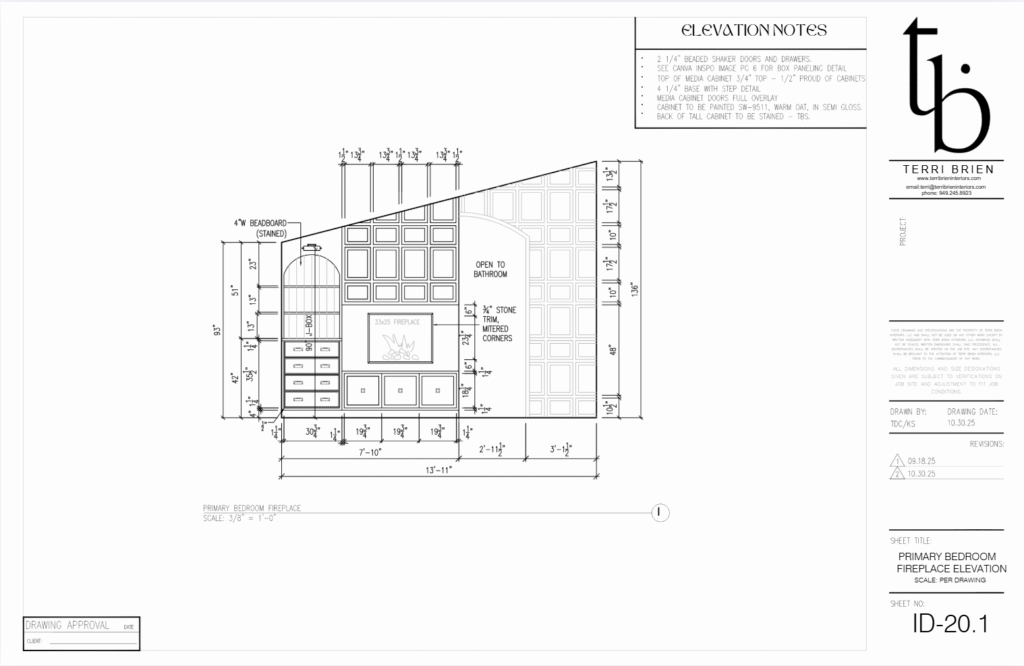
The Roadmap for Construction. Once plans and selections are refined and aligned, we prepare the Interior Design Set, often referred to as the ID Set. This packet is handed off to the contractor and becomes the execution roadmap for the renovation.
It includes:
• Detailed finish schedules
• Plumbing and appliance specifications
• Lighting plans
• Electrical intent and placement
• Tile layouts
• Cabinetry drawings and millwork details
• Material selections and installation notes
Without this level of documentation, details get interpreted. And interpretation during construction often leads to delays, confusion, or unnecessary cost.
Pre-Construction Alignment
Before demolition begins or major construction progresses, we meet with the general contractor and team to walk through the ID Set alongside architectural drawings. This alignment ensures everyone is working from the same playbook before walls are opened and materials are installed. We shift as the build demands it, update the ID Set and redistribute to ensure alignment.
During Construction: Where an Interior Designer Is Most Active On Site
This is the phase many homeowners never see. We attend plumbing, electrical, and low-voltage walks to ensure design intent is being executed correctly.
During one remodel, we had specified specialty flush outlets designed to minimize disruption to a slab backsplash. During the electrical walk, we discovered standard electrical boxes had been installed instead instead of the specialty ones the outlets called for. Catching it early prevented damage to the drywall and stone later.
We have also identified:
• Missing outlets inside appliance garages
• Incorrect cabinet finishes delivered onsite
• Thermostat placements interfering with a perfect opportunity for wall art
• Missing plumbing for a pot filler
The list goes on.
These are the kinds of quiet interventions that protect your investment.
As cabinetry moves into production, we review shop drawings to confirm proportions, trim profiles, storage configurations, and finish intent. Millwork is not just storage. It defines the architectural experience of the home. How our client live, how they entertain. It supports daily life.
For natural stone countertops and backsplashes, we meet with the fabricator to review seaming plans, grain direction, and vein layout. Every slab is different. Where a seam lands. How veining wraps an island. These decisions must be made before fabrication begins, not after.
When working with patterned or high-variation tile, we attend dry lays to ensure proper blending and minimize awkward cuts. We review how tile is being trimmed out so the final installation feels deliberate.
We also review flooring direction and transitions between materials. Something as simple as plank orientation can change how a room reads the moment you enter it.
Even the most thoughtfully planned remodel will require adjustments. When questions arise onsite, we collaborate with the contractor and trades to evaluate options and determine the most informed path forward. Documentation is updated as needed so the entire team remains aligned.
The burden does not fall on the client. We filter decisions. Present solutions. Guide the process forward so clarity and momentum continue.
Procurement and Delivery Oversight
While construction progresses, we are managing procurement behind the scenes. Plumbing fixtures. Lighting. Hardware. Custom pieces. Furnishings.
We track deliveries, coordinate with receiving warehouses, and resolve deficiencies as they arise. If something arrives damaged or incorrect, we handle the communication and reselect process so the project does not stall.
Proactive oversight protects both schedule and investment.
Final Walkthrough and Deficiency Review
As installation nears completion, we conduct key site visits to confirm execution aligns with the approved design intent.
Finally, we attend deficiency walks with the contractor to review the home in detail before completion. Every finish, transition, and installation is evaluated. It is meticulous work. And it protects the integrity of the finished result.
Every project has hundreds of small decisions that shape the final outcome. When those decisions are made with clarity, collaboration, and intention, the result feels seamless.
If you’re planning an Orange County remodel and want a team who understands how design and construction truly work together, we’d love to connect.
You can explore our full-service design process or schedule a discovery call when the timing feels right.
Frequently Asked Questions About What Interior Designers Do During an Orange County Remodel
What does an interior designer do during construction?
An interior designer collaborates with the general contractor and trades throughout construction to ensure the design intent is executed correctly. During an Orange County remodel, this often includes attending electrical and plumbing walks, reviewing cabinetry and millwork shop drawings, coordinating stone fabrication layouts, managing finish selections, and troubleshooting onsite issues before they impact the client.
Do I need an interior designer if I already have a contractor?
Yes. A contractor builds according to plan. An interior designer creates and documents the detailed design plan. During an Orange County remodel, the designer provides finish schedules, lighting plans, cabinetry drawings, and layout intent that guide the contractor’s work and reduce costly revisions or interpretation errors.
What is an Interior Design Set?
An Interior Design Set is a detailed packet provided to the contractor during a renovation. It includes material specifications, tile layouts, lighting placement, plumbing selections, cabinetry drawings, and finish schedules. It serves as the roadmap for executing the design accurately.
At what stage should I hire an interior designer for an Orange County remodel?
The ideal time to hire an interior designer is before architectural plans are finalized and before construction begins. Early collaboration allows for alignment between architecture, design vision, and build investment, reducing costly revisions later in the process.
How does an interior designer prevent mistakes during a remodel?
By attending key site walks and reviewing installation details before walls close or materials are permanently installed. Designers often catch incorrect outlet placement, missing specialty items, wrong finishes, improper stone seam layouts, or tile pattern inconsistencies before they become expensive corrections.
What is the difference between interior design and decorating during a remodel?
Interior design during an Orange County remodel involves planning spatial layout, coordinating with trades, specifying architectural finishes, and guiding construction decisions. Decorating focuses primarily on furnishings and styling after construction is complete.


Comments Off on What an Interior Designer Does During an Orange County Remodel